
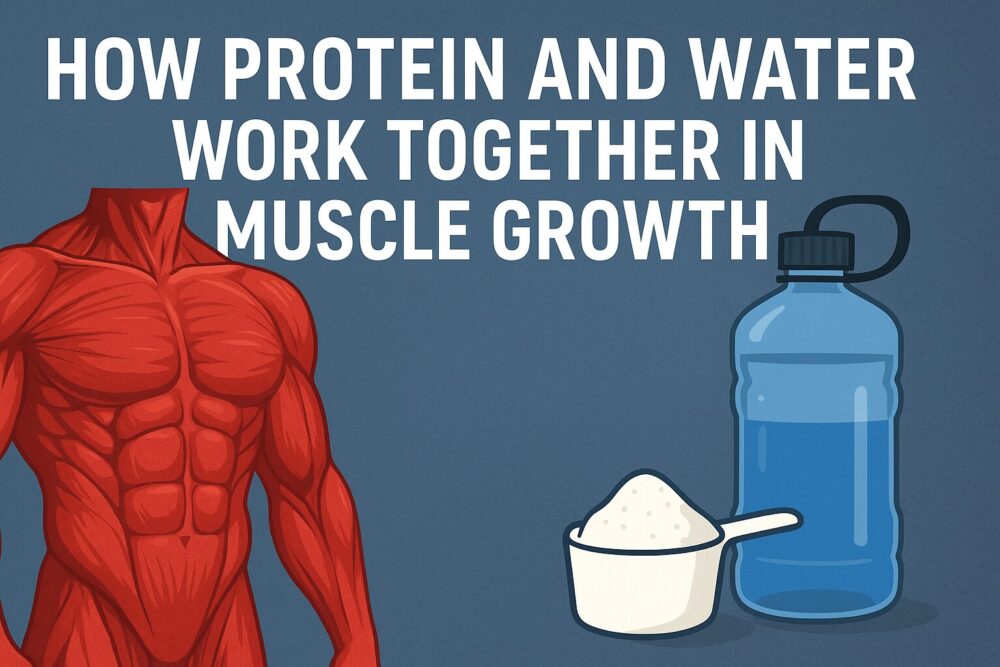
You’ve probably heard it a thousand times : “Bro, you gotta get your protein in.” And yes, protein is the VIP guest at the muscle-building party… but here’s the thing, without water, it’s like sending that VIP to the wrong address. No party, no gains.
So, let’s break down exactly why water is crucial for protein efficacity, and how protein and water work together in muscle growth ? By the end, you’ll see water as your muscles underrated best friend, and you’ll know exactly how much you should be drinking.
- Why Protein and Water Are Both Essential for Muscle Growth?
- The Science: How Protein and Water Work Together in Muscle Recovery?
- What are The Signs You’re Not Drinking Enough Water for Muscle Growth?
- Balancing Protein and Water for Maximum Muscle Gain
- Practical Hydration Strategies for Muscle Building
- The Temperature & Season Factor
- Common Myths About Protein and Water in Muscle Growth
- Action Plan for Combining Protein and Water for Maximum Muscle Growth
- Conclusion
- FAQ
Why Protein and Water Are Both Essential for Muscle Growth?
Proteins are the building blocks of your body. Every time you lift, jump, or literally push yourself in a movement-based home workout, you create tiny micro-tears in your muscle fibers. Amino acids, the building blocks of protein, are sent in by proteins to help fix and then rebuild those fibers, but they repair bigger and stronger.
Water is the transit, the electrician, and the sanitation. As per the review published in MDPI reports that in lean mass-including muscle-water represents roughly 76% of muscle mass. Insufficient hydration and your body will not be as good at transporting amino acids to muscle cells, clearing waste from training or maintaining the environment in which protein synthesis takes place.
I would say: protein makes the bricks, but water powers the truck to carry them to the construction site.
The Science: How Protein and Water Work Together in Muscle Recovery?
Water Supports Protein Digestion and Transport
Once you eat that protein shake, eggs, or chicken breast, your body breaks it down into amino acids. This process requires adequate fluids for smooth digestion and for those amino acids to travel through your bloodstream to muscle tissue. A dehydrated body slows down nutrient transport like a traffic jam.
Water Powers Muscle Protein Synthesis
Muscle protein synthesis (MPS) is the process where your body turns those amino acids into new muscle tissue. Water helps regulate the cell’s internal environment, enabling the biochemical reactions needed for MPS. A study from the Journal of Applied Physiology found that dehydration can reduce muscle protein synthesis efficiency and impair recovery.
Water Helps Remove Training Waste Products
When you train hard, your muscles produce metabolic waste, lactic acid, urea, and ammonia. Water is the medium that flushes these out. Without it, your muscles stay in a fatigued, acidic state longer, slowing growth and performance.
What are The Signs You’re Not Drinking Enough Water for Muscle Growth?
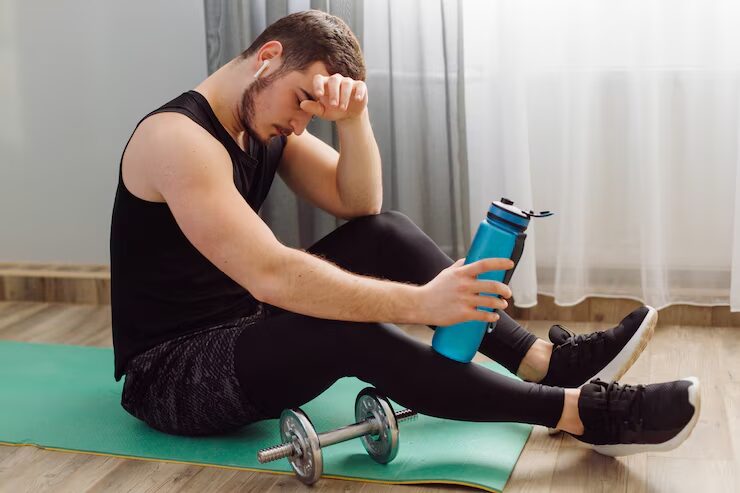
There are many noticeable signs that will help you know your body is not receiving the right amount of water:
- Persistent muscle soreness despite adequate protein
- Fatigue or sluggishness during workouts
- Cramps, especially during high-intensity sessions
- Reduced “muscle pump” even with a good workout
- Trouble digesting high-protein meals
If you’ve noticed any of these, you might not be under-eating protein, you might just be under-drinking water.
Balancing Protein and Water for Maximum Muscle Gain
Increasing protein intake increases your water needs. Why? Breaking down protein produces nitrogen, which your kidneys filter out through urine. That filtration process demands more fluid.
Daily Protein Needs for Home Fitness Athletes
For active individuals, research suggests 1.6–2.2 grams of protein per kilogram of body-weight is ideal for muscle growth (Morton et al., 2018).
Water Needs When Increasing Protein
When you bump up protein, increase your water intake by at least 0.5–1 liter per day above your baseline needs. The easiest way to know your personal number is to use our free water intake calculator, it factors in your workouts, weight, and activity level so you never guess.
Practical Hydration Strategies for Muscle Building
- Drink a glass of water with every protein meal or shake: you’ll help digestion and nutrient absorption.
- Hydrate before your workout: start your session fully hydrated to maintain performance.
- Sip during training: especially during longer sessions or in hot conditions.
- Replenish post-workout: combine protein with fluids to kickstart recovery.
- Include water-rich foods: our guide to the Best Foods to Eat for Better Hydration During Home Workouts lists fruits and veggies (watermelon, coconuts …)that boost water intake naturally.
The Temperature & Season Factor
When you train in hot or humid conditions, your body loses fluids much faster through sweat, which means your hydration needs can increase significantly. Failing to replace these fluids quickly can lead to dehydration, reduced workout performance, and slower recovery.
That’s why having a clear plan for warm or cold weathers training is essential.
Common Myths About Protein and Water in Muscle Growth
Many people believe a lot of what they think facts about protein, water and muscle growth, but the truth they are just myths like these:
- Myth 1: Drinking more water dilutes protein in your body.
False. Water supports protein metabolism, it doesn’t “water down” your muscles. - Myth 2: You only need water when thirsty.
Thirst is a late dehydration signal. By the time you’re thirsty, performance is already dropping. - Myth 3: Protein shakes replace hydration needs.
No. Liquid calories don’t count toward optimal hydration, you still need plain water.
Action Plan for Combining Protein and Water for Maximum Muscle Growth
- Calculate your daily protein target (1.6–2.2g/kg body-weight).
- Use our water intake calculator to find your exact hydration needs.
- Pair every protein meal with water.
- Monitor urine color, light straw means hydrated; dark yellow means drink more.
- Adjust for sweat loss, hotter days or intense workouts mean extra fluids.
Conclusion
Think of protein and water as Batman and Robin for muscle growth, you need them both to fight off poor recovery and weak performance. Protein lays down the bricks, water delivers them, and together they build the physique you’re training for.
So, before you obsess over your next protein shake recipe, ask yourself: am I drinking enough water to make it count?
FAQ
Can you build muscle without drinking much water?
Technically, you can gain some muscle without optimal hydration, but progress will be slower and recovery will suffer. Water is essential for nutrient transport, protein synthesis, and muscle cell function. Dehydration can reduce strength, endurance, and the efficiency of protein use in the body.
Does eating more protein mean I need to drink more water?
Yes. When you increase protein intake, your body produces more nitrogen waste from breaking down amino acids. Your kidneys need extra water to filter and remove this waste efficiently. If you’re upping your protein for muscle growth, aim to increase your daily water intake by at least 0.5–1 liter above your normal needs.
Should I drink water before or after consuming protein?
Both. Drinking water before a protein-rich meal aids digestion, and consuming water afterward helps transport amino acids to muscle cells more effectively. For best results, pair each protein meal or shake with at least one glass of water.
What are signs I’m not drinking enough water for muscle growth?
Warning signs include slower recovery, persistent muscle soreness, reduced “pump” during workouts, fatigue, cramps, and dark-colored urine. If you notice these symptoms, calculate your exact needs using our Free Water Intake Calculator and adjust your daily intake accordingly.