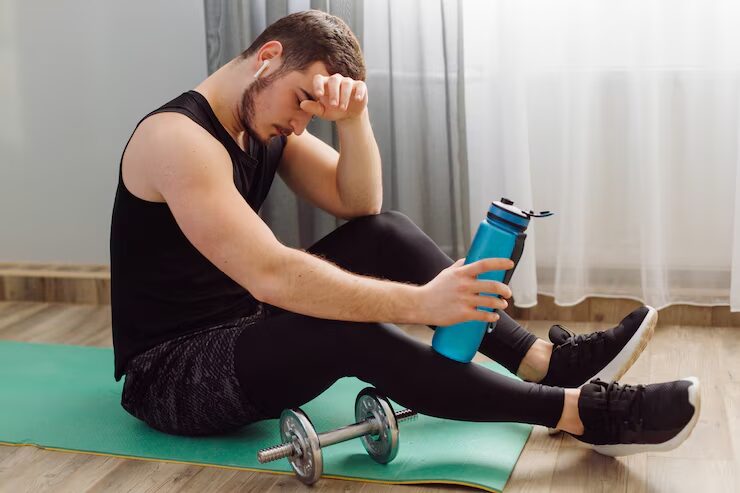


Proper hydration is very important yet mostley overlooked factor for muscles recovery, and it can optimize your overall results from your home workouts. Staying hydrated will significantly enhance muscle repair, reduce soreness and optimize performance over time.
Many people tend to prioritize protein, sleep and supplements over water in their daily regimen; yet this essential resource plays a pivotal role in how your muscles recover post exercise.
In this guide, you will explore the science behind hydration and muscle recovery, dehydration effects and how optimizing water intake will enhance your fitness journey.
- Why Hydration Matters for Muscle Recovery?
- What Are The Effects of Dehydration on Muscle Recovery?
- Water Timing for Better Recovery
- What Science Tells Us about Hydration, Inflammation & Muscle Protein Synthesis
- Common Myths About Hydration and Muscle Recovery
- How Much Water Do You Really Need for Recovery?
- Boost Your Recovery
- Conclusion
Why Hydration Matters for Muscle Recovery?
Around 75% of muscle tissue consists of water; during an intense resistance training or bodyweight HIIT workout, your muscles experience microscopic tears which need to be repaired post workout in order to maximize muscle growth and strength gains. Recovery allows the body to restore these tears, resulting in muscle growth and strength gains.
Hydration and muscle recovery are intrinsically related, through several mechanisms:
Nutrient Delivery: Water plays an essential role in transporting amino acids and other nutrients needed by muscle cells for repair.
Waste Removal: Staying hydrated can help flush away metabolic waste such as lactic acid produced during workouts.
Lubricate Joints: Adequate hydration can promote joint health and reduce post-workout discomfort.
Muscle Protein Synthesis (MPS): Hydration can influence how quickly your body builds new muscle proteins.
Research published in the Journal of Applied Physiology suggests that even a 2% decrease in body water can severely compromise physical performance and hinder recovery time. [source]
What Are The Effects of Dehydration on Muscle Recovery?
Home Exercisers often underestimate the effect related to dehydration and muscle recovery. Without enough water to drink before, during, and after their workout session, they may experience:
- Increased muscle soreness (DOMS)
- Slower recovery time and reduced strength gains between workouts
- Poor coordination and focus.
- Dehydration Increases Injury risk
According to the National Library of Medicine, dehydration leads to decreased blood plasma volume which reduces oxygen and nutrient delivery to muscles, increasing risk for injury. [source]
Dehydration also raises core temperature and heart rate, making your workouts feel harder and less effective. So if you find yourself pushing through soreness but making little progress, it might be worthwhile examining your hydration habits to ensure proper hydration levels for maximum effectiveness.
Water Timing for Better Recovery
Timing is also very important to benefit the maximum possible from your hydration. Three periods to consider: pre, while, and post workout hydration, and this what you will need to know:
Pre-Workout Hydration
Kick-start every session right by drinking 400-600ml (13–20 ounces) of water within two to four hours before training to prime your body for peak performance and support thermoregulation during intense effort. This will also help ensure thermoregulation during intensive effort is effectively maintained.
While Working Out
Exercise causes fluid loss through sweat, even at home. For exercise lasting 30+ minutes, make sure you hydrate every 15–20 minutes by drinking 150-250 ml (5-8 oz). When participating in intensive HIIT or circuit training programs, track sweat loss to rehydrate adequately.
Post-workout Hydration
This is where hydration and muscle recovery truly meet. Replacing fluids post-exercise is essential to help muscles repair and reduce inflammation. Drink at least 500–700 ml (17–24 oz) within 30 minutes of finishing your workout.
If you’re in search of more accurate numbers that reflect your body and training habits, check out pre-workouts vs post-workouts hydration.
What Science Tells Us about Hydration, Inflammation & Muscle Protein Synthesis
Following exercise, your body begins a multistep recovery cycle of inflammation, tissue rebuilding and protein synthesis. Let’s see how hydration supports this entire recovery cycle:
- Inflammation Control: While exercise-induced inflammation is normal, prolonged or excessive inflammation delays healing. According to studies from the Journal of Strength and Conditioning Research, proper hydration helps control pro-inflammatory cytokines. [source]
- Muscle Protein Synthesis (MPS): Water plays an essential role in muscle protein synthesis (MPS). Dehydration can impede protein metabolism and slow muscle repair/growth after resistance training, hindering MPS.
- Electrolyte Balance: Muscle contractions rely on sodium, potassium and magnesium levels–minerals heavily affected by hydration–for proper functioning. Disruption to this balance results in cramping, weakness and prolonged soreness in muscles.
Staying hydrated after home workouts is the cornerstone of muscle recovery, and should never be neglected as an essential step to success.
So, if you’re serious about optimizing your muscle recovery after home workouts, staying properly hydrated isn’t optional, it’s foundational.
Common Myths About Hydration and Muscle Recovery
Let’s dispel some common myths surrounding hydration and muscle recovery:
- “To drink when thirsty”: by the time you’re thirsty, your body has already become mildly dehydrated. Thirst is not necessarily an accurate indicator of proper hydration during or post exercise.
- “Water should be enough to fuel every workout.” If your training session exceeds 60 minutes, or you sweat heavily, additional electrolytes and fluid replenishment may be required; otherwise, for most home workouts under an hour, water alone should suffice.
- Coffee dehydrate you: Coffee doesn’t significantly dehydrate active individuals if consumed moderately – just don’t count it towards your water total! While caffeine has some mild diuretic properties, coffee intake in moderation won’t significantly dehydrate.
How Much Water Do You Really Need for Recovery?
How much water should I drink for recovery? This is a very common question but unfortunately, there is no set answer as your hydration requirements depend on:
- Your body weight
- Training intensity and duration
- Climate/temperature
- Sweat rate
General guidelines recommend about 35 ml per kg of body weight per day, but this increases significantly with exercise.
Opt for accuracy instead of guesswork with the Water intake calculator – using your weight, activity level, lifestyle factors to provide a personalized hydration plan you can actually follow.
Boost Your Recovery
Hydration is key, but combining it with other strategies can increase results even further, such as some recovery techniques and fitness recovery routines. Here’s some techniques and tips that will enhance your recovery process:
- Active recovery (light movement)
- Stretching and mobility work
- Sleep optimization
- Post-workout nutrition
- Foam rolling and massage
Hydration amplifies the benefits of each technique by improving circulation and reducing inflammation.
Conclusion
Muscle soreness, fatigue and slow progress might not be caused by overtraining but by under-hydration instead. Hydration and muscle recovery is just as essential to successful performance as protein and rest.
Make science your friend by hydrating smarter, recovering more quickly, and training harder with reduced fatigue.
If you’re unsure about how much water your body requires for recovery and results, Utilize the water intake calculator now, and stay one step ahead in reaching your home fitness goals.