

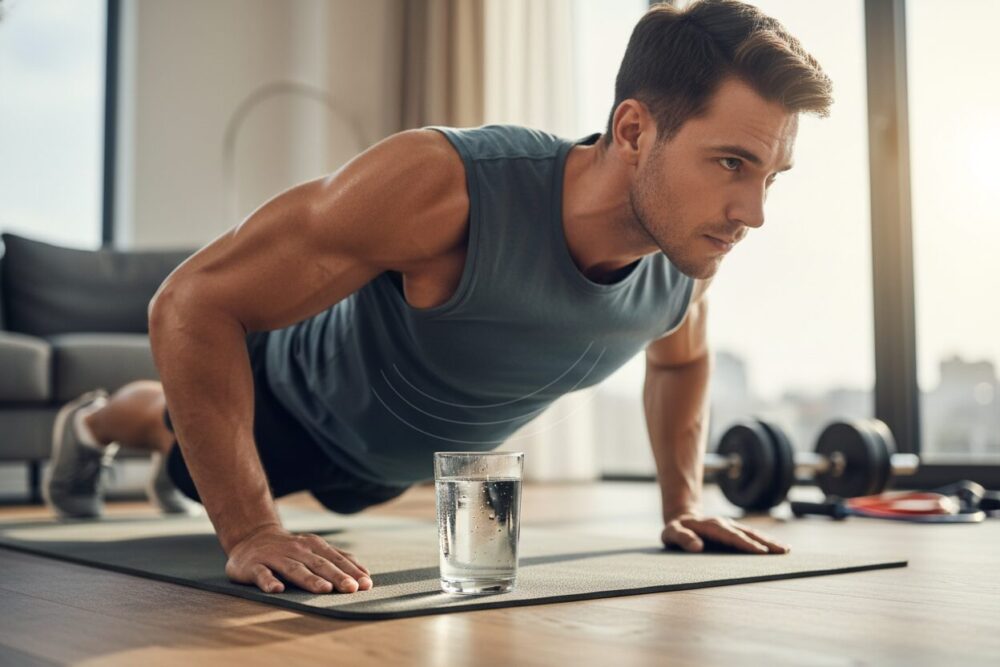
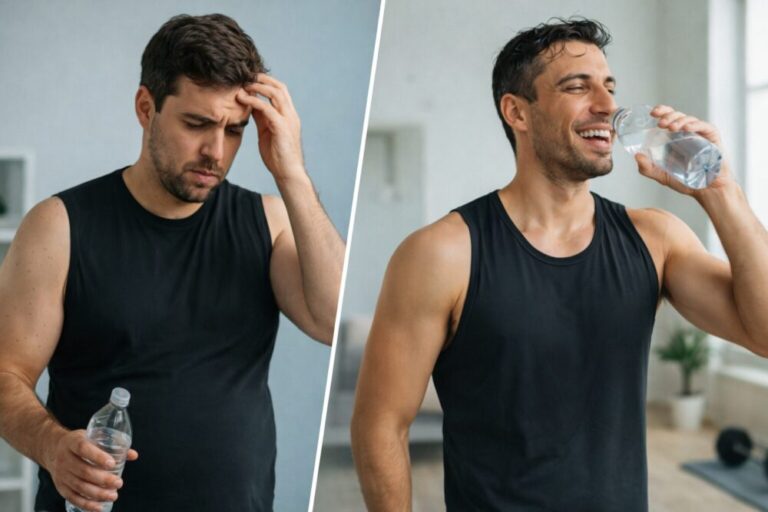
Most people and athletes alike tend to focus on macronutrients like calories or training volume while ignoring water’s power. Yet, dehydration directly affects your strength gains and fat loss goals, two of the primary goals for any training regimen, whether at home or at the gym.
In this article, we’ll discuss how dehydration affects strength gains and fat loss, based on scientific studies as well as practical solutions. If your progress seems stagnant despite training hard and eating correctly, you’re in the right place.
Why Hydration Matters for Muscle Gain and Fat Loss?
Your body is about 60% water, and every physiological process, muscle contraction, protein synthesis, nutrient absorption, and fat metabolism depends on hydration. Even a 1–2% loss of body water can impair athletic performance, cognitive focus, and recovery capacity.
Yet, too many people fall into hydration mistakes that kill their home fitness progress, like relying solely on thirst signals or ignoring electrolytes. Proper hydration isn’t about quenching thirst; it’s a direct performance enhancer and fat-burning accelerator.
How Dehydration Affects Strength Gains?
These are the most common results on how dehydration can stall your muscle gain progress:
1. Decreasing Training Volume and Intensity
Progressive overload (the gradual increase of weight, sets, or reps) is the cornerstone of strength development, but dehydration throws this process off track from its first set onward.
- Energy availability decreases: Water is crucial in supporting carbohydrate metabolism, and dehydration can lower glycogen breakdown efficiency, leaving your muscles with less available energy to use for powering their functions.
- Central fatigue increases: When we become dehydrated, our bodies respond by increasing perceived exertion; lifting becomes harder even though the actual weight remains unchanged. This makes each lift seem heavier even though its total weight remains constant.
- Strength endurance declines: A controlled study published in the Journal of Strength and Conditioning Research found that passive dehydration resulting in approximately 1.5% loss of body mass significantly reduced bench press 1-RM performance. After rehydrating and resting for 2 hours, participants’ performance improved, underscoring how even mild dehydration can directly impair strength output.(source)
Over time, this can result in reduced training stimuli for hypertrophy, less mechanical tension on muscles, and slower growth both in terms of size and strength.
2. Decrease in Muscle Power Output
Powerful movements such as Olympic lifts, sprints, and heavy squats require explosive recruitment of fast-twitch muscle fibers; herein lies where dehydration can wreak havoc with your performance.
- Reduced plasma volume: With less fluid in circulation, the heart must exert itself more vigorously to supply blood and oxygen to muscle groups.
- Neuromuscular Signaling Issues: Electrolytes such as sodium, potassium, and magnesium conduct electrical impulses that trigger muscle contractions. Dehydration interferes with this balance and leads to slower firing rates due to disrupted electrolyte balance, resulting in slower firing rates.
- Lower Explosive Output: Arnaoutis et al. 2022 research indicated that athletes experiencing mild dehydration experienced reduced jump height and sprint performance, both of which are dependent on peak power output.
Lifters often experience slowness in their squats and deadlifts; sprints/HIIT bursts lose intensity, thus limiting strength progression.
3. Reduced Protein Synthesis
Muscle development involves more than lifting weights; it’s about rebuilding and strengthening following each workout session. Dehydration impedes this recovery cycle.
- Reduced Nutrient Transport: Water serves as the medium for carrying amino acids, glucose, and hormones to your muscles after exercising; without enough water intake, your cells cannot access these essential building blocks of muscle repair.
- Slower protein synthesis: Recent studies indicate that cellular dehydration acts as a catabolic signal, inhibiting protein synthesis while encouraging its breakdown.
- Delay Recovery: Instead of recovering quickly after workouts, soreness may remain longer, and you could miss opportunities for progressive overload.
Simply put, even the greatest protein shake won’t reach where they need to go without proper hydration.
How Dehydration Affects Fat Loss?
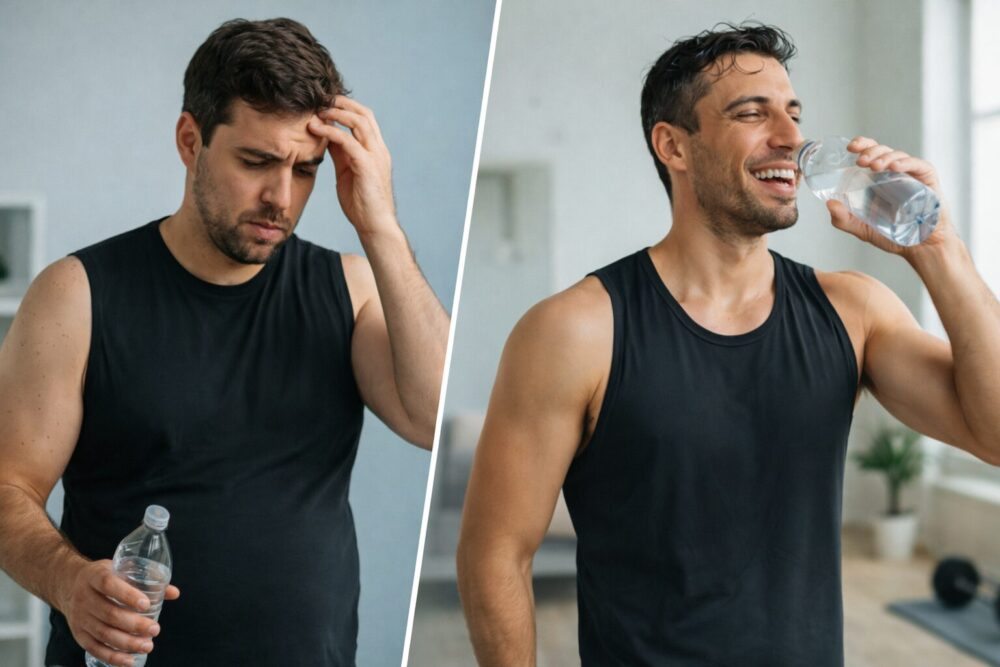
Weight loss can be a nightmare or an easy, entertaining journey if you respect every success factor, and proper hydration is one of them:
1. Slower Fat Oxidation
Fat loss fundamentally depends on your body’s ability to mobilize stored fat and burn it for energy. This process, called lipolysis, requires sufficient hydration:
Step 1: Fat Mobilization – Stored triglycerides must be broken down into free fatty acids to start mobilizing them out of fat cells and back into circulation.
Step 2: Transportation – Fatty acids enter the liver and muscles via bloodstream transport.
Step 3: Oxidation – Within mitochondria, fatty acids are converted to usable energy (ATP).
Water is essential at every stage, from enzyme activity and nutrient transport, to cell respiration. Being dehydrated can have serious repercussions:
- Your blood volume decreases, decreasing its efficiency in transporting fatty acids.
- Your liver function declines over time, slowing fat oxidation (Cheuvront & Kenefick, 2014).
- As your body shifts towards breaking down glycogen and protein instead of fat for energy production, its effectiveness as a fat loss mechanism decreases.
Practical takeaway: Failing to drink enough fluid can result in muscle loss instead of fat loss, hindering long-term results and possibly derailing any diet-induced weight loss efforts.
2. Increased Hunger and Cravings
Your body often mistakes thirst for hunger, since both sensations are controlled by the hypothalamus in your brain. Dehydration may trigger food cravings, even when your body doesn’t require energy for fueling itself.
Dennis et al. (2010) conducted an experimental study that demonstrated how drinking 500 ml of water prior to meals can significantly decrease calorie consumption in overweight adults. Why?
- Water provides a temporary sense of fullness and can help reduce portion sizes.
- Hydration helps control Ghrelin (the hunger hormone), decreasing unnecessary food cravings.
- Staying hydrated helps regulate blood sugar, helping prevent sudden drops that often trigger cravings for unhealthy snacks and binge-eating episodes.
If fat loss is your goal, drinking a glass of water 20–30 minutes prior to meals may help curb overeating and support a natural caloric deficit.
3. Reduced Workout Efficiency
Fat loss workouts like HIIT, circuit training, or strength-based metabolic sessions require high endurance and energy turnover. Dehydration compromises this efficiency in several ways:
- Increased heart rate & body temperature – Your body uses more energy in keeping itself cool than burning fat.
- Reduced plasma volume – When less oxygen reaches muscles, cardio and fat-burning zones become harder to sustain.
- Early fatigue – You may reduce workout duration or intensity, thereby decreasing total calorie burning.
- Reduced Glycogen Breakdown – Water is essential to the metabolism of stored carbohydrates and fat oxidation rates. Without enough water available, energy levels drop precipitously, while fat oxidation drops significantly.
Dehydration creates a “double loss” scenario: your exercise sessions produce less calorie burn, and you recover slower post-exercise, thus diminishing the total fat-loss benefits of your program.
Practical Takeaway: Don’t just hydrate after your workout. Arrive hydrated, sip throughout your session, and replenish any fluid losses afterward. In hotter climates, seasonal hydration recommendations must also be met during home workouts.
The Science Behind Dehydration at the Cellular Level
To fully understand how dehydration affects strength gains and fat loss, let’s break it down at the cellular level:
- Lower plasma volume → less oxygen and nutrient delivery
- Reduced blood flow → slower muscle recovery and endurance
- Electrolyte imbalance → impaired nerve signaling and contractions
- Higher cortisol → promotes muscle breakdown and fat storage
This physiological cascade explains why dehydration doesn’t just make you feel tired; it actively sabotages both strength and fat loss goals.
Practical Hydration Strategies for Strength and Fat Loss
Hydration doesn’t need to be complicated, but it should be intentional. Here are evidence-based strategies:
1. Daily Water Targets
- Aim for 35–40 ml per kg of body-weight daily.
- Use a personalized tool like a water intake calculator to get exact recommendations.
2. Pre-Workout Hydration
- Drink 400–600 ml water 1–2 hours before training.
- Add electrolytes if your workout exceeds 60 minutes or you sweat heavily.
3. During Training
- Sip 150–250 ml every 15–20 minutes.
- For high-intensity strength or fat loss sessions, replace sodium with electrolyte mixes.
4. Post-Workout Recovery
- Rehydrate with 1.5x the fluid lost (weigh yourself before and after workouts).
- Combine water with protein and carbs for optimal recovery.
Conclusion
Proper hydration can help unlock peak performance, and accelerate fat loss. On the other hand, dehydration inhibits strength gains and fat loss by decreasing training volume, hampering fat metabolism, and delaying recovery time.
If you are serious about reaching your results, hydration should be given equal weight alongside nutrition and training. Make gradual but consistent changes; track your intake by using the water intake calculator to create your personalized plan.
Stay hydrated, strong, and efficient as you embark on your strength gain and fat loss journey, and you’ll notice results in no time.
FAQ
How much dehydration affects muscle performance?
Even mild dehydration (1–2% bodyweight loss) reduces strength endurance, power output, and muscle activation.
Can dehydration stall fat loss?
Yes. It impairs fat oxidation, slows metabolism, and often increases hunger.
Is plain water enough?
For most workouts under 60 minutes, yes. For longer sessions or hot climates, include electrolytes.
Does dehydration really impact muscle growth and fat loss?
Yes, studies show that even mild dehydration significantly reduces workout performance, protein synthesis, and metabolic efficiency. This is exactly how dehydration affects strength gains and fat loss—by lowering training intensity, slowing recovery, and making fat oxidation less efficient.
How does dehydration interfere with fat-burning?
Dehydration limits lipolysis, the process of breaking down fat for fuel. It also increases fatigue and cravings, making calorie control harder. That’s how dehydration affects strength gains and fat loss, because both energy use and calorie balance are compromised.
Should fitness enthusiasts worry about small levels of dehydration?
Yes. Even losing just 1–2% of body water can affect performance and metabolism. This is how dehydration affects strength gains and fat loss, since small hydration gaps add up over time and can stall results.



Can I just say what a relief to find someone who actually knows what theyre talking about on the internet. You definitely know how to bring an issue to light and make it important. More people need to read this and understand this side of the story. I cant believe youre not more popular because you definitely have the gift.
I’m glade you liked my content, Thanks 🙂